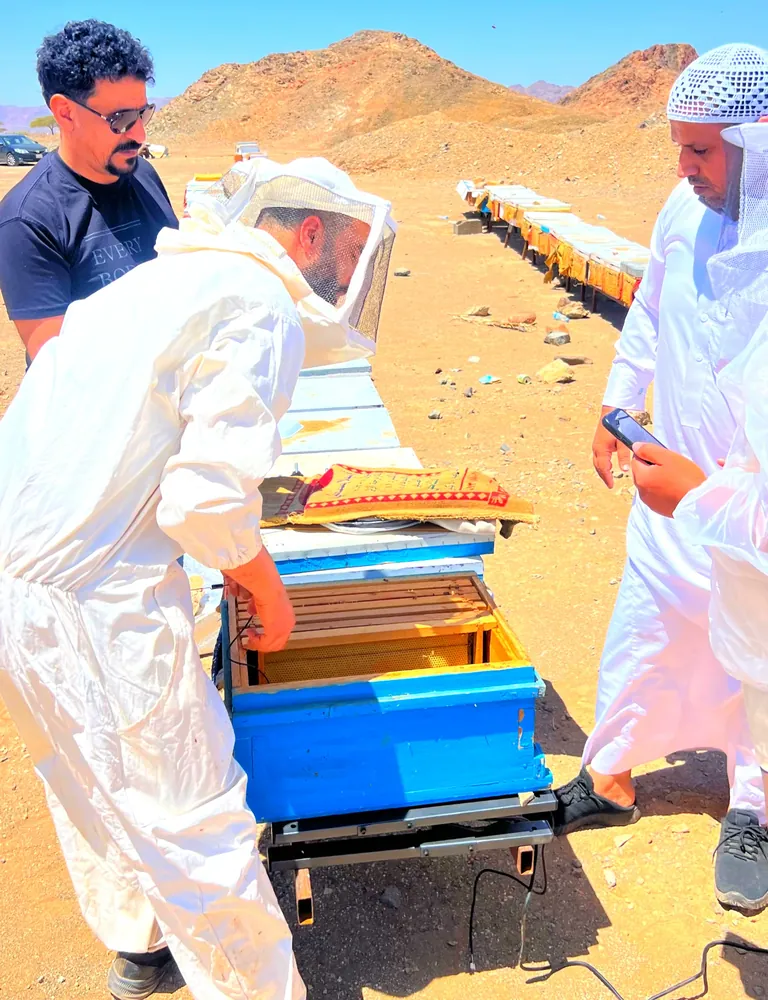
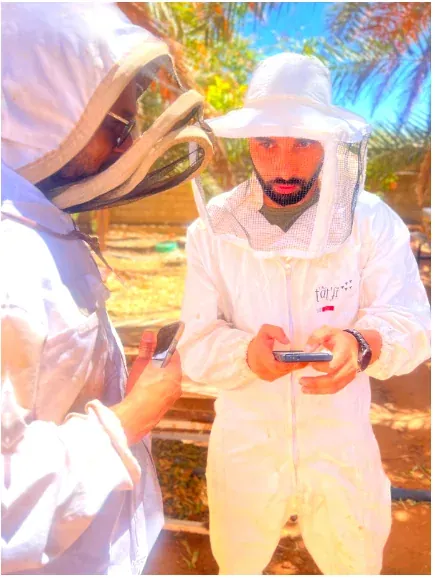
Observe
The system flagged unstable brood humidity in one monitored hive.

In AlUla, connected monitoring, beekeeper training and field follow-up bring hive readings into everyday decisions.
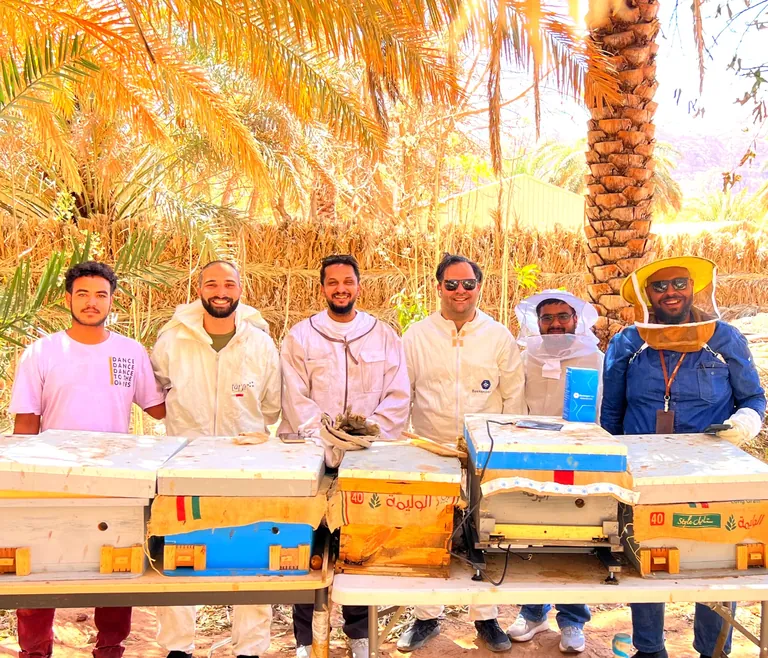
The initiative was co-led by the Royal Commission for AlUla and AFALULA, with implementation by APEXAGRI. Beekeeper.Tech supplied the technology, installation and training.
The project aims to support apiary management in desert conditions, build beekeeper skills and contribute to the preservation of native bees.
The field setup included SmartBeePro devices, hive scales and brood temperature and humidity sensors. Beekeepers received on-site training in setup, maintenance, dashboard use and interpreting readings.
Each device collects data four times per day, then transmits all readings together once daily. Those readings are considered alongside the beekeeper’s observations during inspections.
Beekeeper Dashboard brings together trends, status indicators and recommendations to help teams identify hives needing inspection. Project reports documented practical issues including sensor placement, weak cellular coverage and delayed uploads.
Support continued after installation through periodic reporting and contact with beekeepers. These insights support field expertise rather than replacing hive inspections.
The system flagged unstable brood humidity in one monitored hive.
The report recommended adjusting ventilation and hive entrances. The beekeeper made the adjustment.
The August 2025 report described readings stabilizing within the following week.
A field observation reported by the project team, not a controlled trial or proof of colony recovery or increased yield.
Installation and hands-on training began during the April 12–14 field visit.
Installation, analysis and monitoring reports continued beyond the initial visit.
The status report listed 25 installed devices and 15 awaiting installation. Installed does not mean every device was connected or operational.
Sources: July 2025 project report, August 2025 progress report and device-status report dated December 1, 2025. Figures describe those reporting periods, not the fleet’s current status.